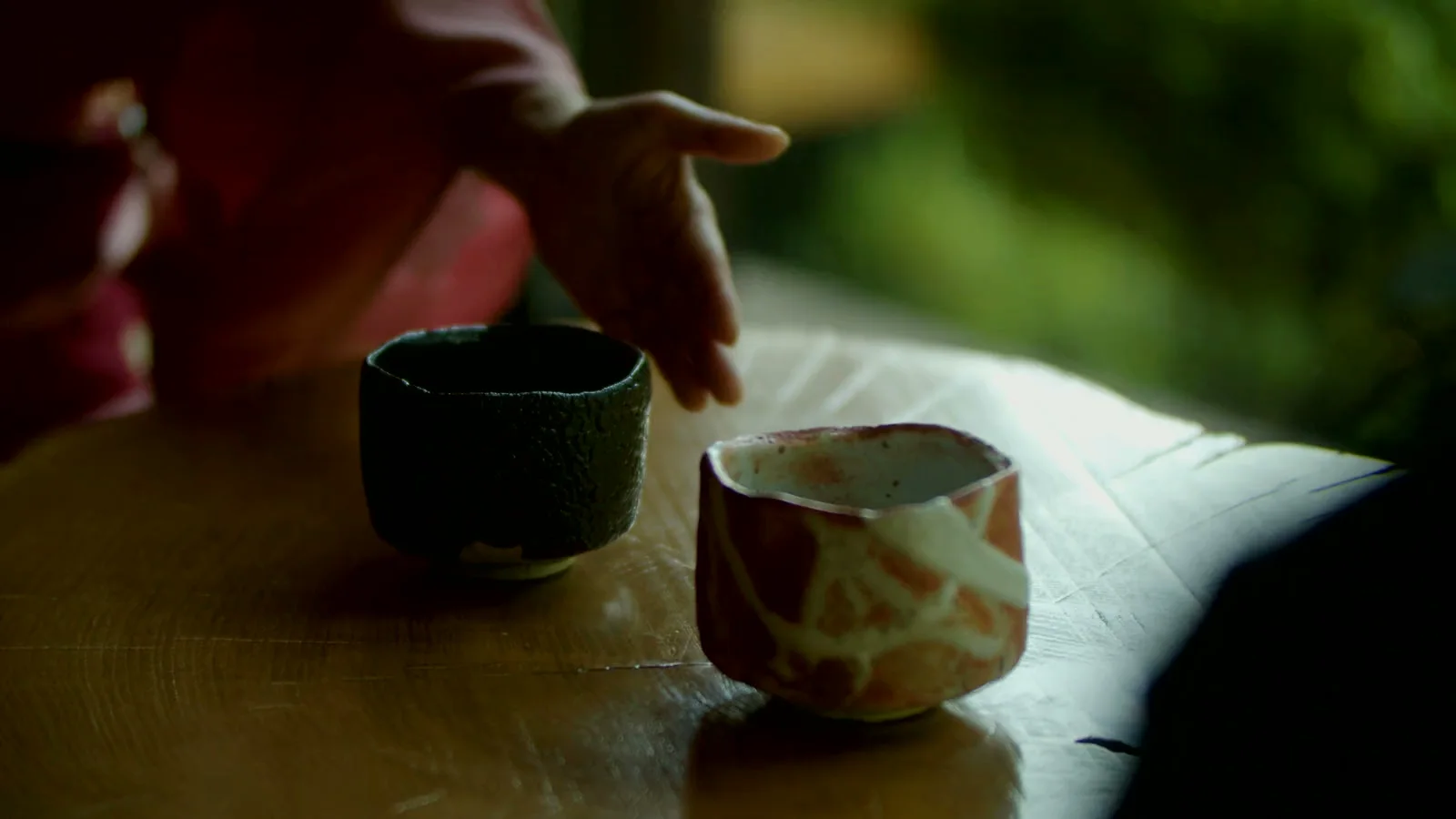
One room your guests will talk about.
We know how hard it is to add anything when staff are few. So the one decision we ask of you is which room. A tea room, a suite, a corner of the lounge — any of them will do.
Son (尊) is the name that Mino ceramic artist Kato Takaya inscribes on his works, out of respect for nature. In that room, your guests choose a chawan (tea bowl), learn its story from a short film in their own language, and drink a bowl of matcha. We call this time "Ippuku — a pause with the artist's bowl" (尊の一服), and the set of paulownia boxes, one chawan to a box, "the Son box".
For properties that want to:
- Give guests one more way to spend their stay, without adding staff
- Hand overseas guests a piece of Japanese culture in their own language
- Offer something, after dinner or before breakfast, that guests will talk about
Where the Son box can stand
- A tea room
- A suite
- A corner of the lounge or library
- A detached cottage
- A private dining room
- In a private rental house: the guest room, the room with the sunken hearth (irori), the veranda
In that stillness, a single chawan in your guest's hands.
Choose. Learn. Whisk. Drink.
Choose.
Open a box, and there is one chawan. Shino, white with traces of fire; Setoguro, black. Your guest picks one.
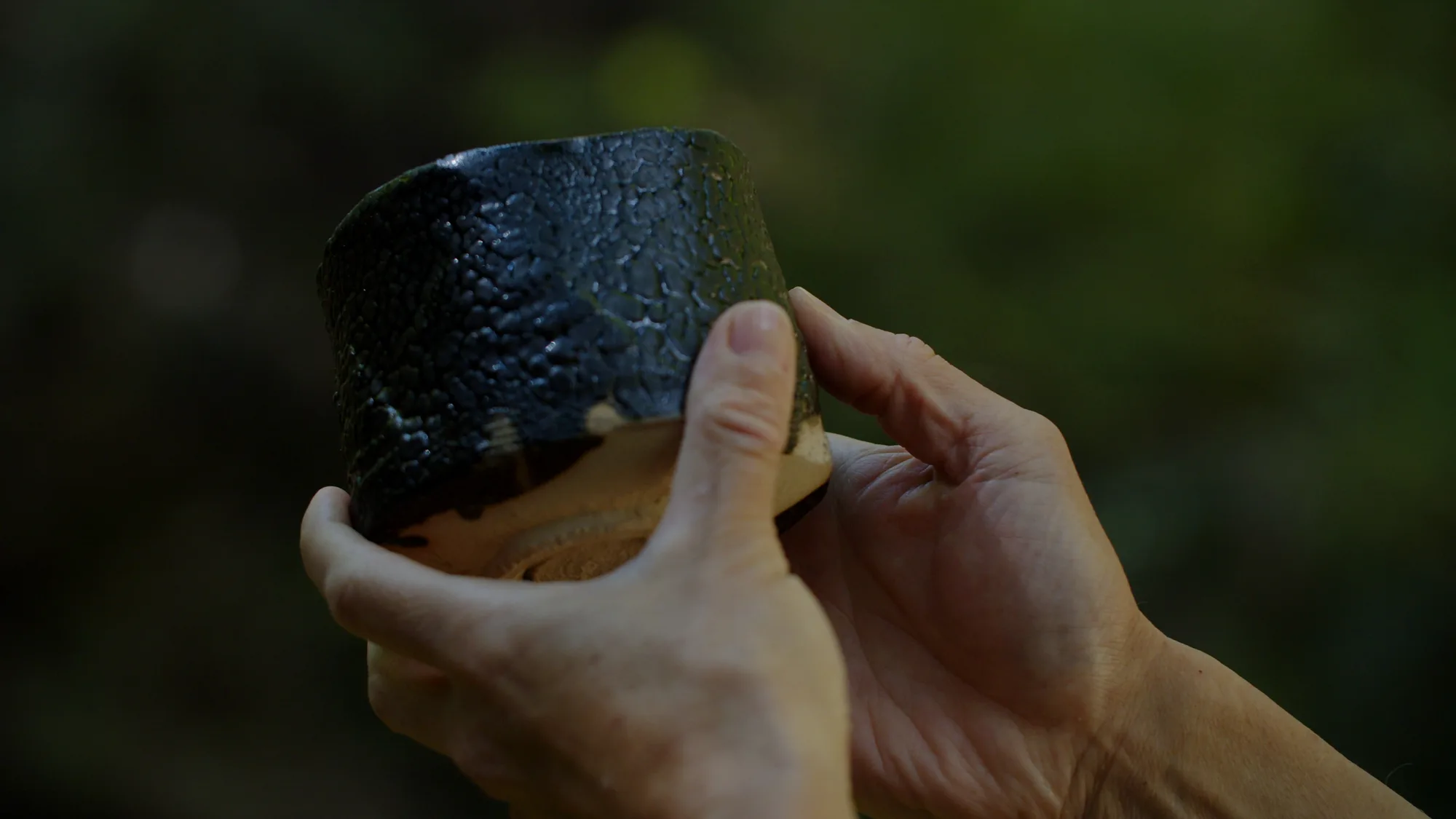
Learn.
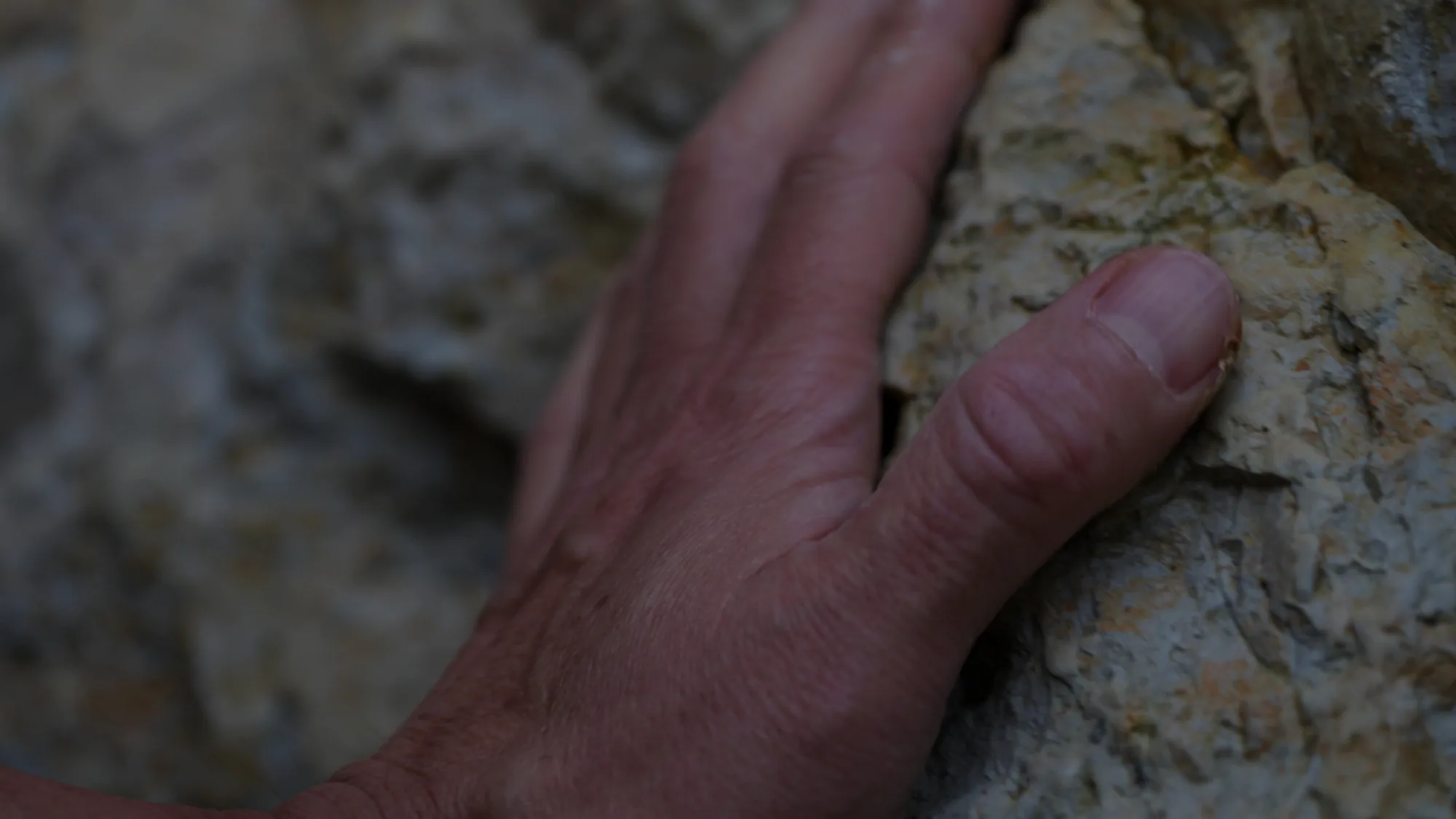
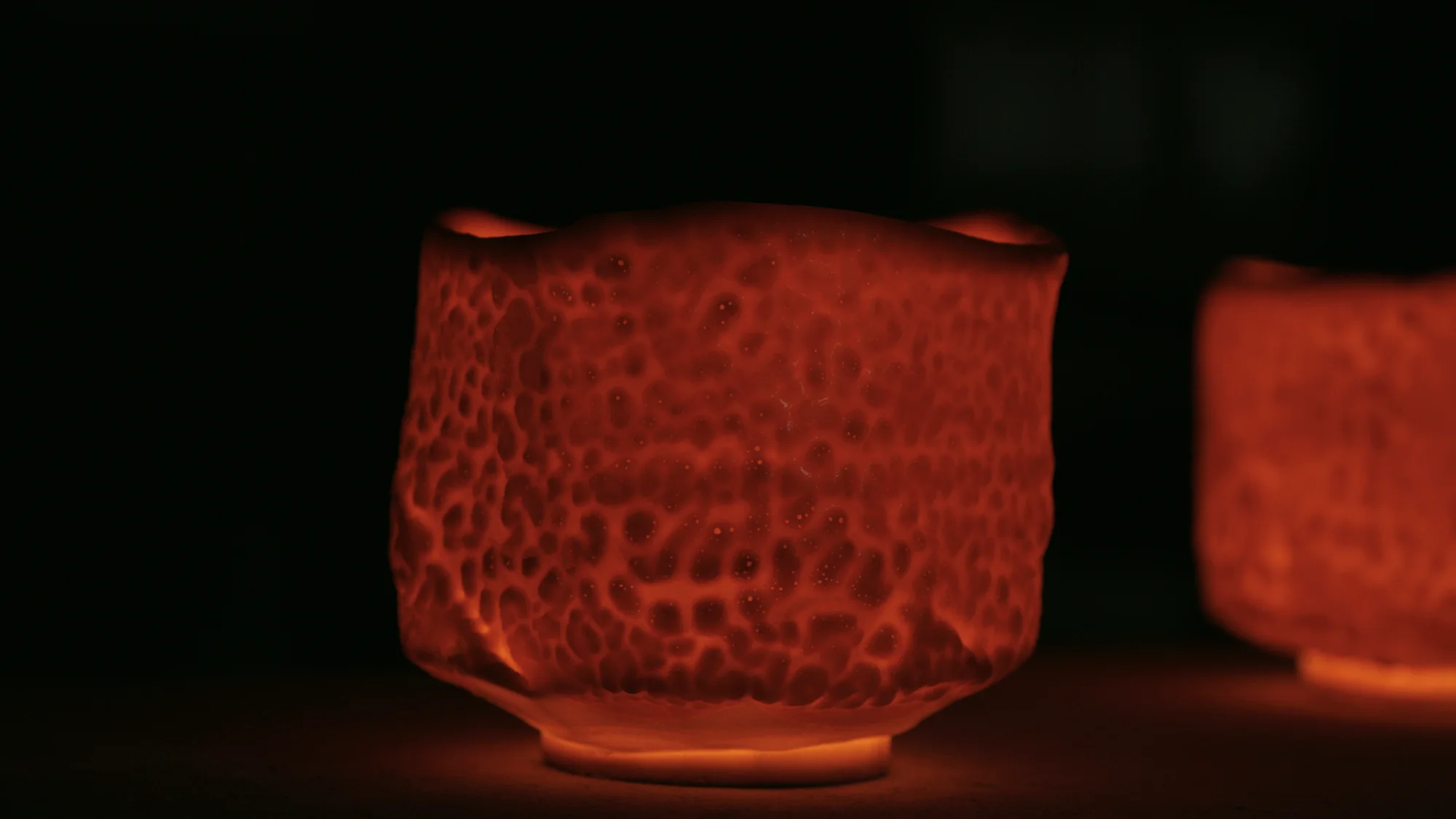
A small card with a QR code beside the bowl opens a short film in the guest's language: the white clay that appears only after the mountainside is cut away, the kiln that takes seven days from lighting to cooling, the moment a red-hot bowl is pulled from the fire.
Whisk.
The film goes on to show how. Guests whisk their own bowl, or your staff whisk and serve. With a sweet of your choosing.
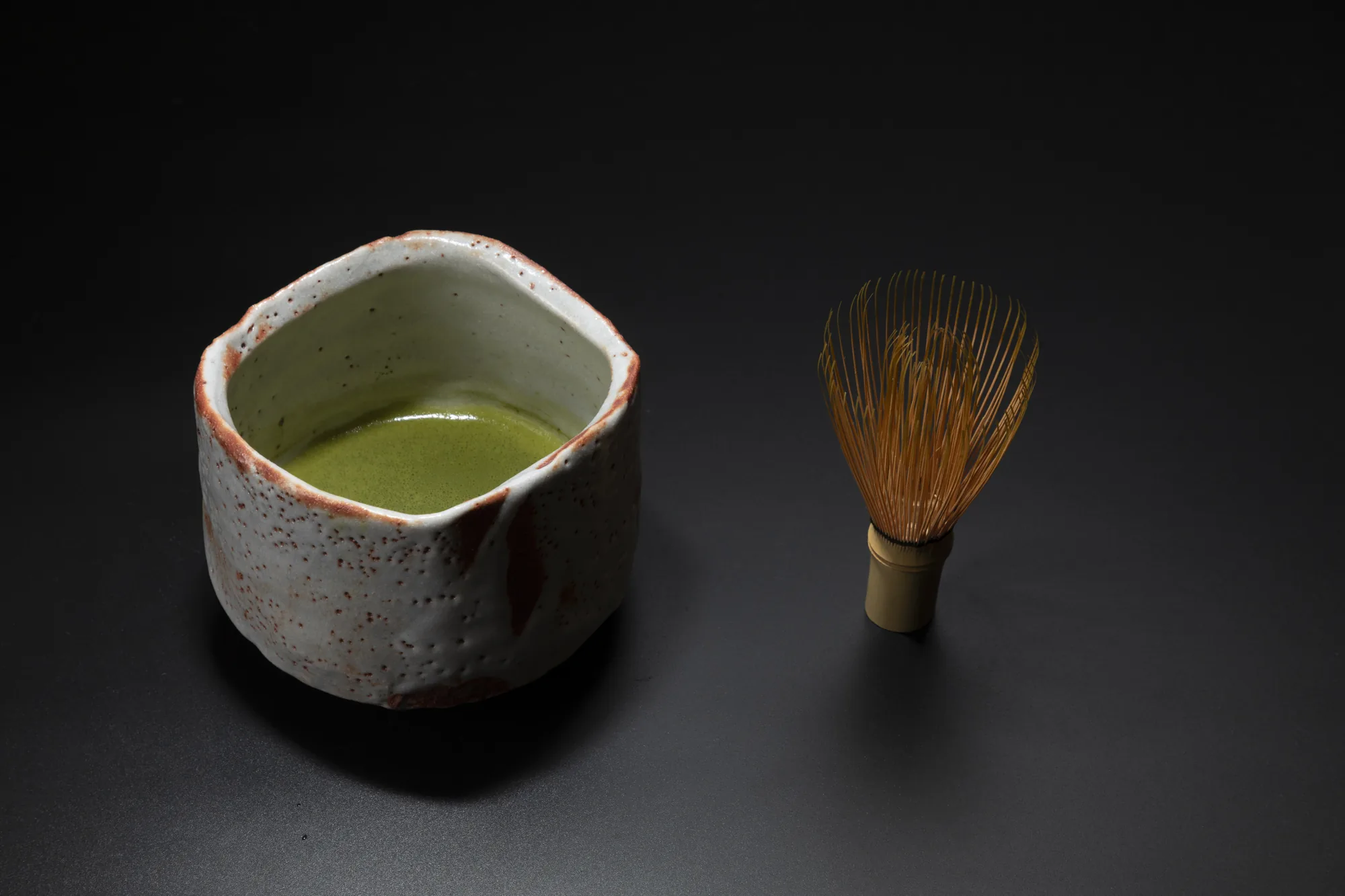
Drink.
Looking out of the window. The weight, the warmth, the feel of the rim. The clay they saw on the screen is now in their hands.
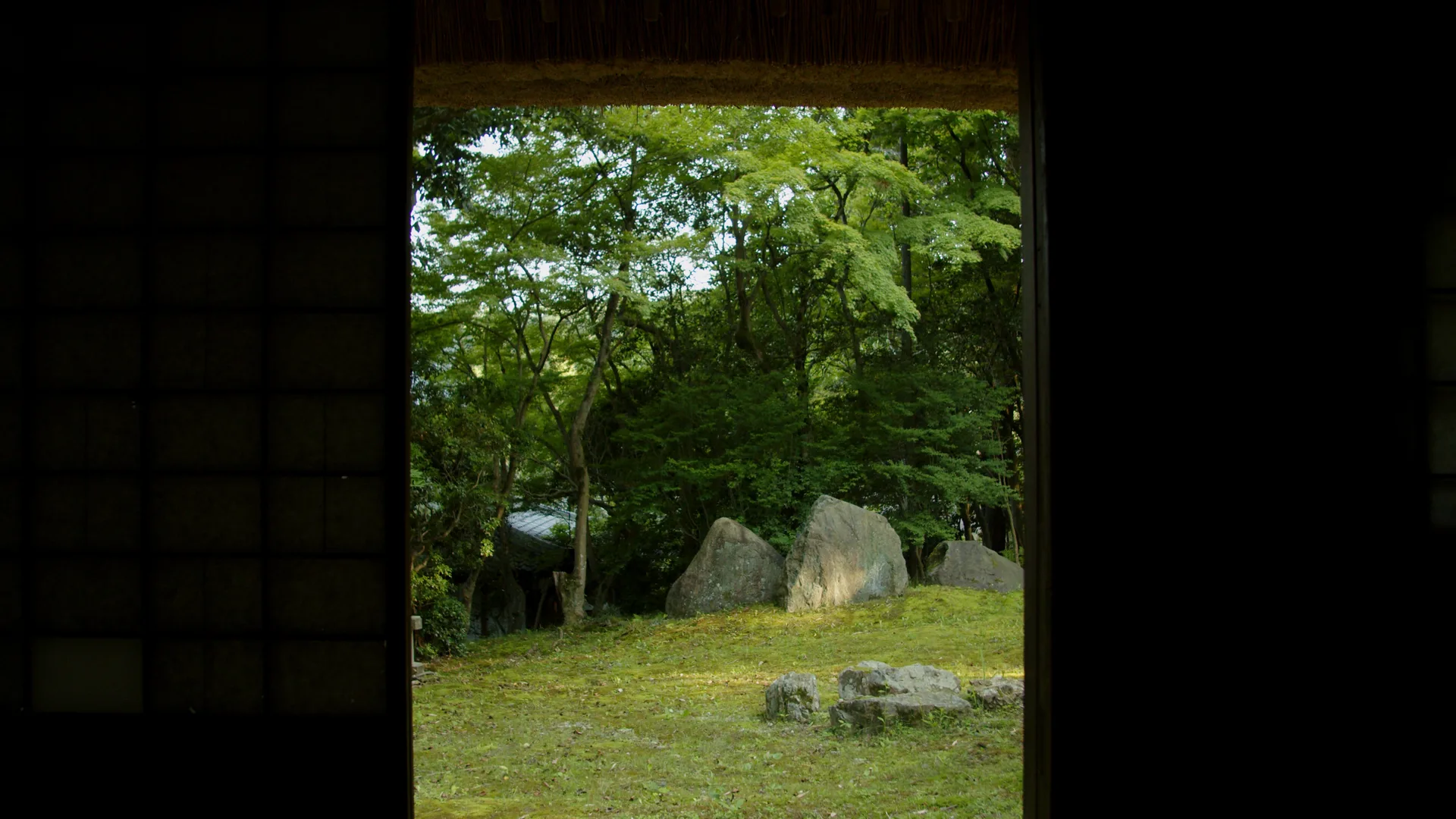
After use, the chawan goes back into its box with its record card (a small card kept with each bowl).
Alongside your own.
Your property will have vessels of its own — from a local kiln, or handed down. What we bring does not replace them. Use them side by side. Your own vessels carry the memory of this place; ours carry the memory of the Japanese tea ceremony.
Why these bowls, and not others
- One
Bowls with a place in the history of tea.
Shino and Setoguro were born in Mino some four hundred years ago, in the Momoyama period, when the tea ceremony came into flower. Of all the tea bowls made in Japan, only two are designated National Treasures; one is a Momoyama Shino bowl, "Unohanagaki". Shino, white with a faint flush of fire; Setoguro, black from being pulled out of the kiln while it still burns. Bowls you would otherwise have to travel to Mino to hold, in your own room.
- Two
Works by an artist with a name and a record.
Kato Takaya of Suisho Kiln — repeatedly selected for the Japan Traditional Kogei Exhibition, a full member of the Japan Kogei Association, a certified Traditional Craftsman. His works otherwise stand behind the glass of an exhibition room.
- Three
The marks.
The artist has incised the character 尊 into the foot of every bowl. Each bowl comes in a paulownia box on whose lid he has brushed the same character and pressed his seal. The card with the bowl carries the artist's name, the name of the work and the name of the kiln.
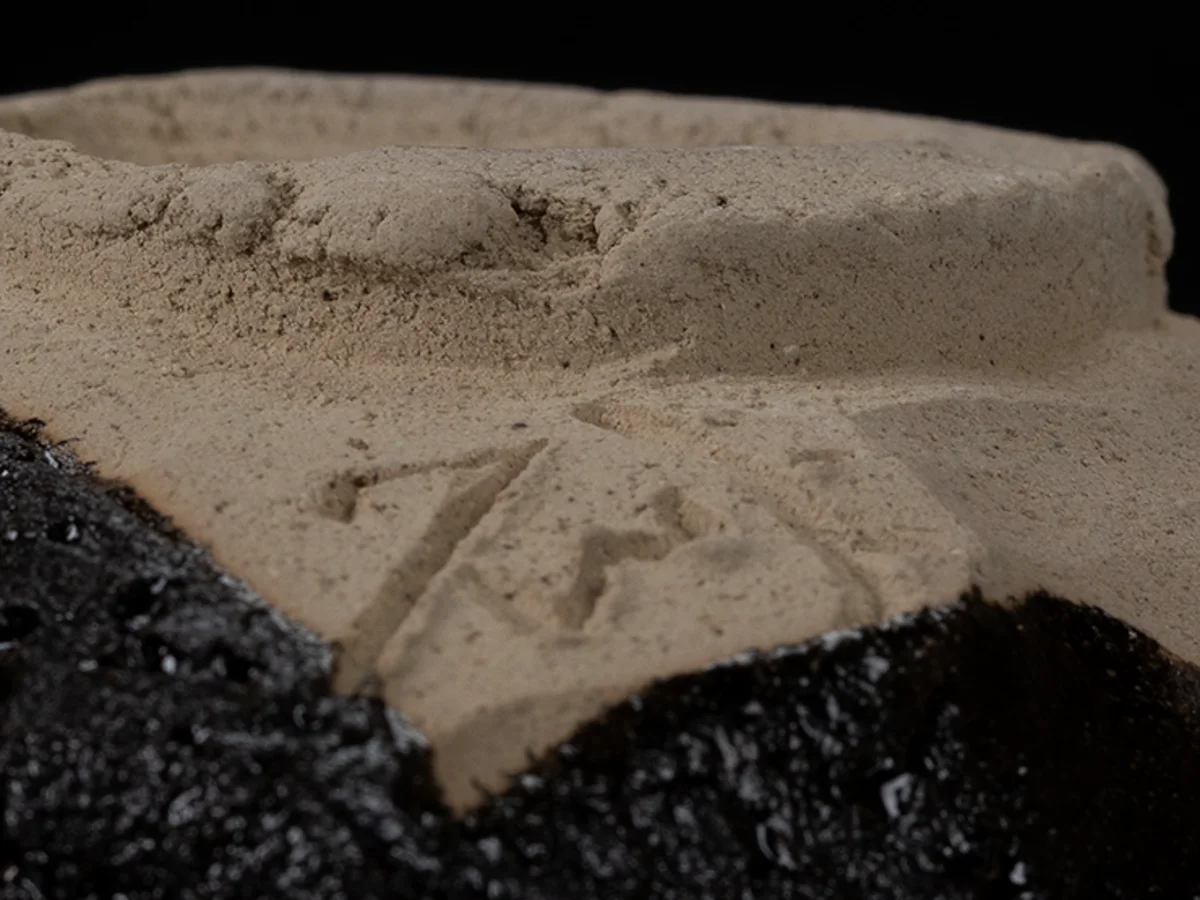
The character 尊, incised beside the foot. Setoguro chawan.
- Four
Where it was born.
From the QR code on that card, your guest watches the artist dig the clay and fire the seven-day kiln — in Japanese, English and Chinese.
History, a name, the marks, the place it was born. With all four, your guest can say to someone: "I drank tea from a Shino bowl of the kind they have made since Momoyama."
What arrives: the Son box
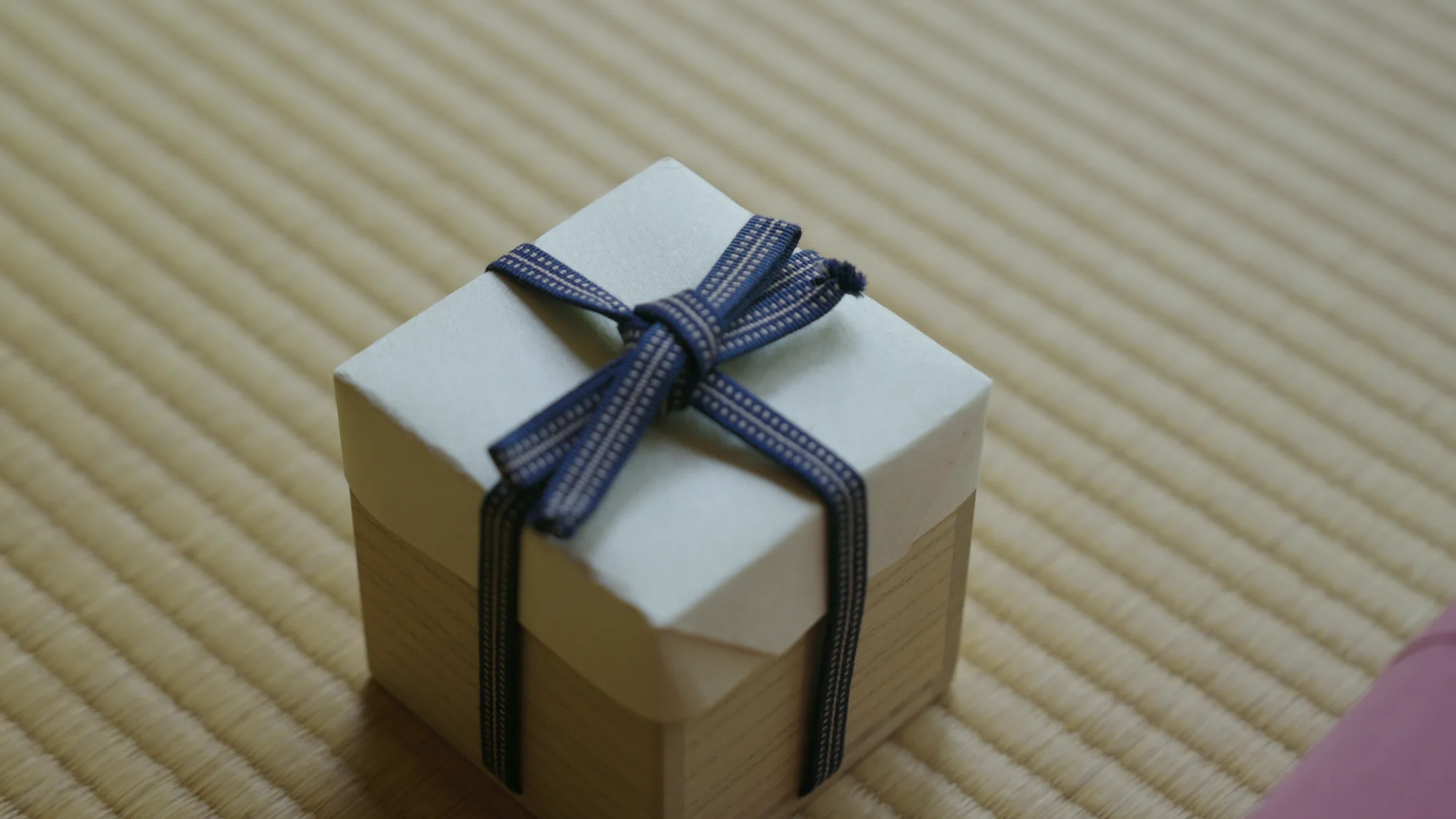
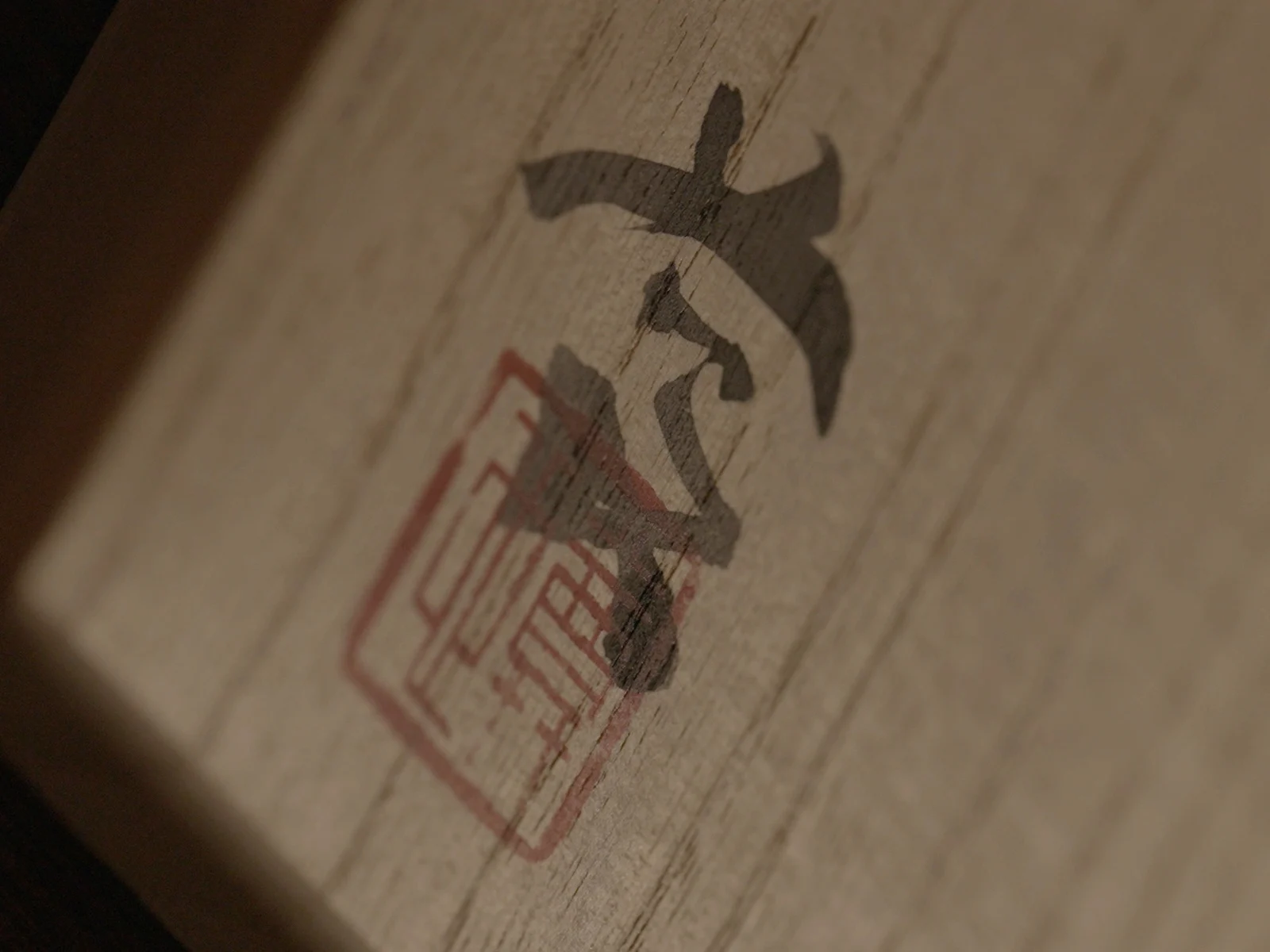
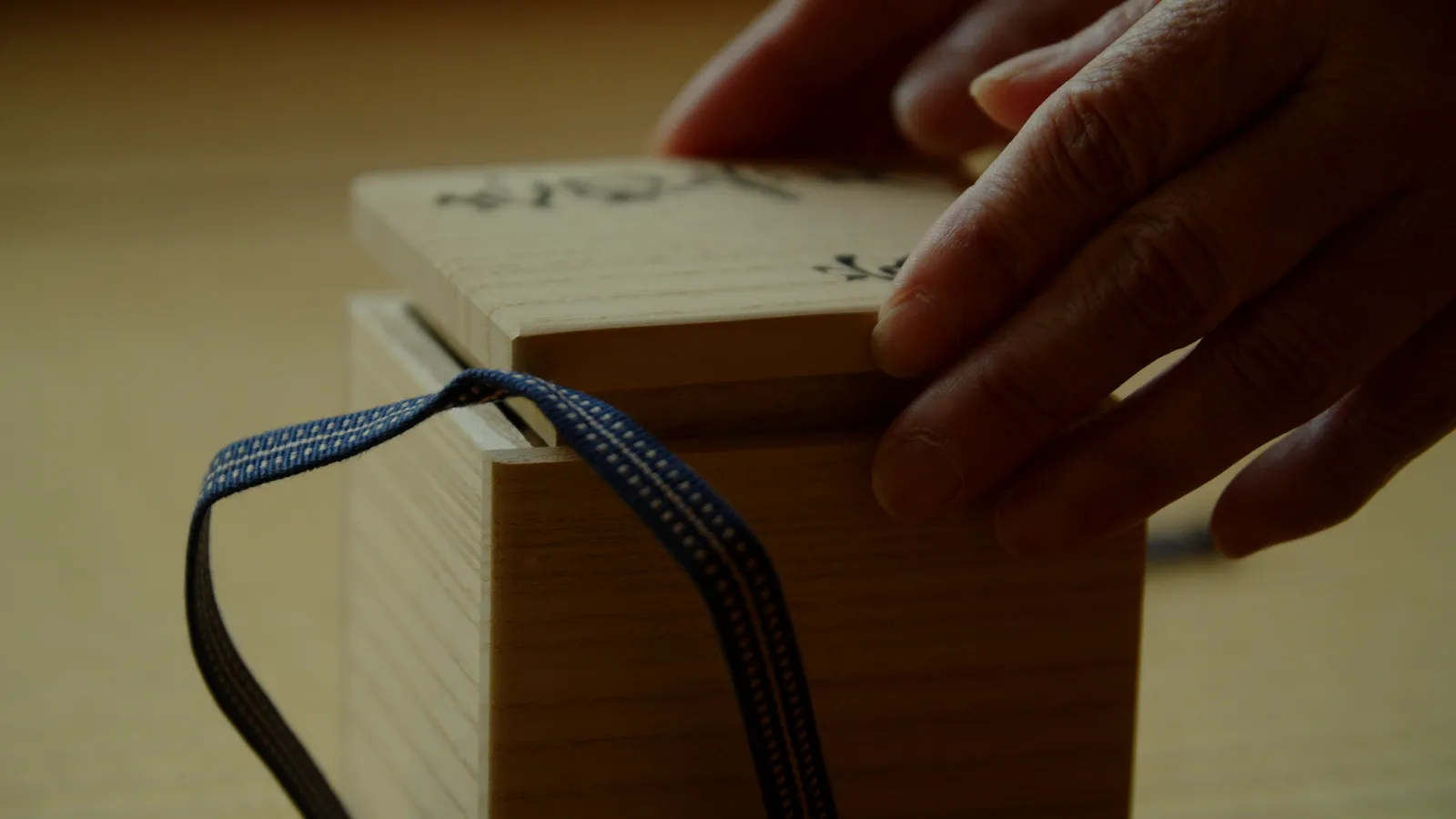
One paulownia box for each chawan, and on each lid, in the artist's own brush, the kind of vessel and the character 尊, with his seal. Inside the box: the chawan, its record card, and a small card with a QR code that opens the films. Matcha, the tea whisk (chasen) and the tea scoop (chashaku) are your own; we can send Son matcha if you wish. Hot water, cups for sweets and the sweets themselves are your own.
- 1chawan
- 2paulownia box
- 3inscription on the lid
- 4record card
- 5QR card
The drawing shows two chawan. You can start with one.
All that is added on your side.
What we ask of your property
- Decide the room where the bowls will stand
- Set a time for the tea, and open the room
- Serve the bowl with a sweet (whisked by the guest, or by your staff)
- Provide matcha, a tea whisk and a tea scoop (we can send Son matcha if you wish)
- Wash the bowls as shown on one sheet of paper, and return them to their boxes with the record card
What we do
- Explain the works — the films do it, in the guest's language
- Advise on where and how to place the bowls
- Arrange a new bowl if one breaks — one message is enough
- A three-minute film for your staff
- Write the text and supply the photographs for a stay plan that includes the tea
- As a property that keeps the works of a recognized traditional craftsman, you may name the artist in your guest information and menus.
How it works
- We lend the chawan to your property. You do not buy the works.
- You can start with one chawan. With two, one Shino and one Setoguro, your guests can choose.
- Never two properties in the same area.
Pricing and terms are shared with venues on request.
In Japan, and outside Japan
What is the same everywhere: the works, and the films in your guests' language.
In Japan, we visit with the bowls before you decide.
Outside Japan, we show you the bowls online, and shipping, insurance, customs, what happens when a bowl breaks, and the fee and the terms are arranged with you one by one, since every country is different. Write to us and we will talk.
See the bowls before you decide.
In Japan, show us the room and we will bring the chawan and the Son box. Outside Japan, we meet you online.