Kato Takaya
"None of this can be done overnight. What I have now is the sum of one thing after another."
— Kato Takaya, from an interview in March 2026
Clay — the hands moved before anyone taught them
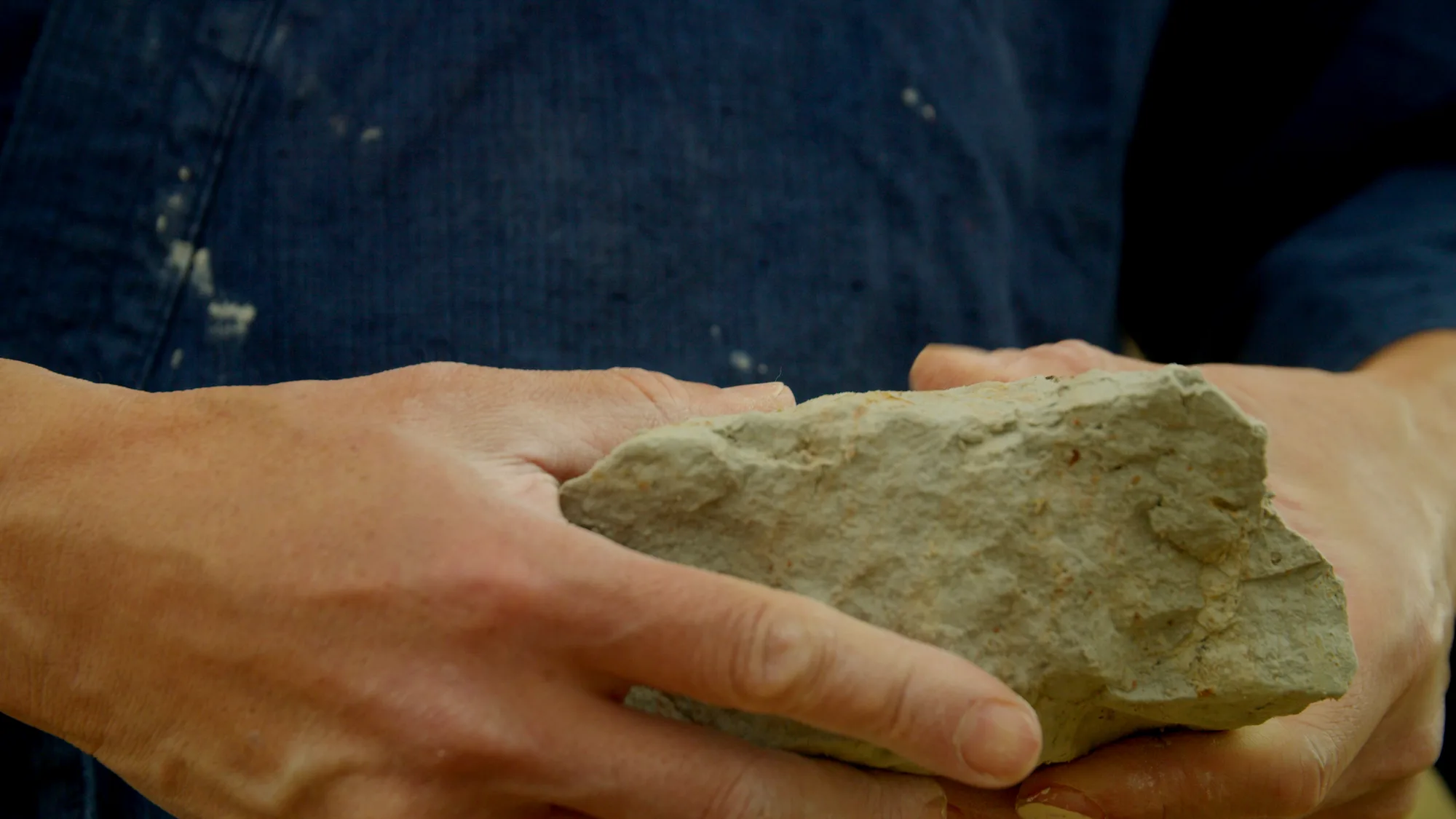
A workshop in Tajimi. Hands kneading clay, wet and shining.
He loved drawing as a boy and spent his days in museums. Drawing led to sculpture, then to architecture. What he loved kept changing, he says, but making things by touching clay never did.
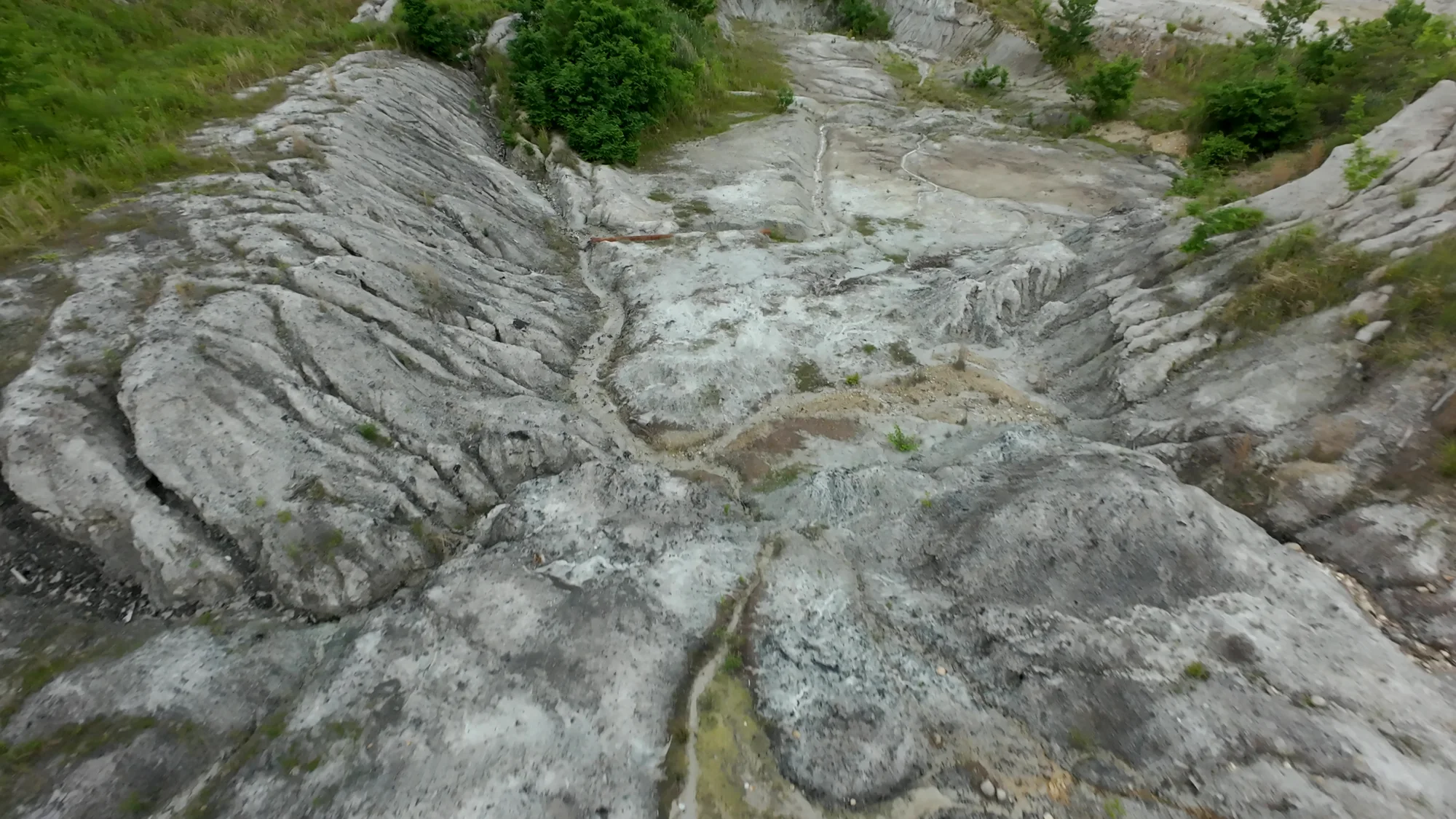
He began Shino (the white ware of Mino, with traces of fire in the glaze) in his early twenties. Good clay was hard to find, and the bowls would not come out as he wanted. He left it for a time and made contemporary pieces no one else was making. Then he walked the mountains digging clay, found the material he had been looking for, and came back to Shino.
The clay he uses now is mogusa, a clay buried in Mino: coarse, full of fine air, warm to the hand even after firing, with a little iron that lets it withstand sudden cooling. The white of Shino and the black of Setoguro both begin in this clay.
"Since I was small I have loved drawing, and what I loved moved from drawing to sculpture to architecture. But making things with my hands in clay is the one thing that has never changed."
— Kato Takaya, from an interview in March 2026
Hands — too much is wrong, too little is wrong
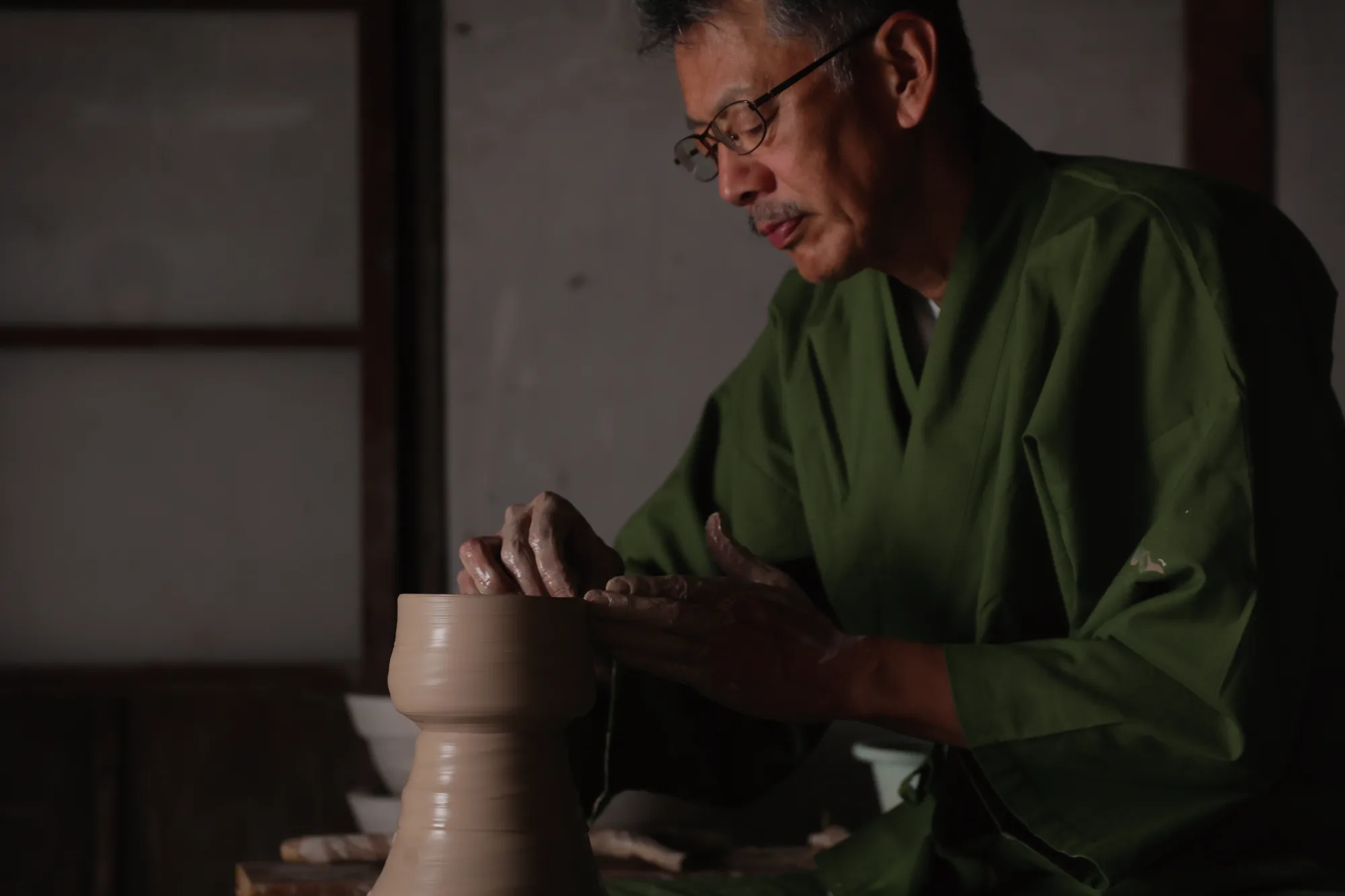
A chawan (tea bowl) turned upside down. A wooden tool travels once around the ring of the foot.
The foot is hidden once the bowl is set down. It is the first thing a tea practitioner looks at. The wheel is a hand-turned wheel a hundred years old; it does not spin evenly, and slows as he throws. The clay stretches to that slowing.
Trimming is the work of finding where to stop, reading the surface and the hardness of the clay. No two feet are alike.
"Trim too much and it is wrong; trim too little and it is wrong. I read the clay's surface and hardness, and stop at the best place."
— Kato Takaya, from Ichiwan Hyakuwa 1, "The Foot" (the artist's series of short talks)
Fire — a white that waits, a black that decides
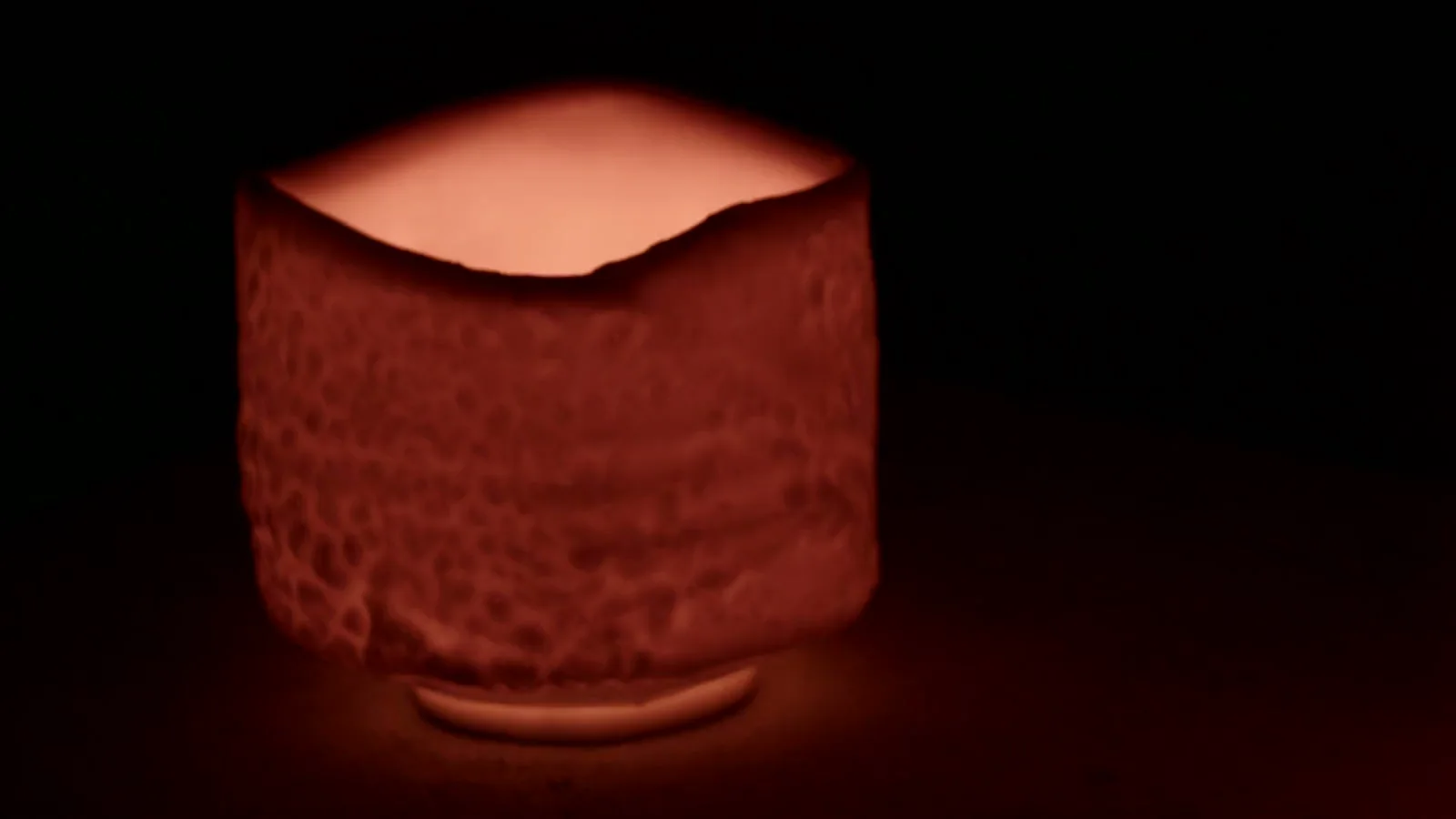
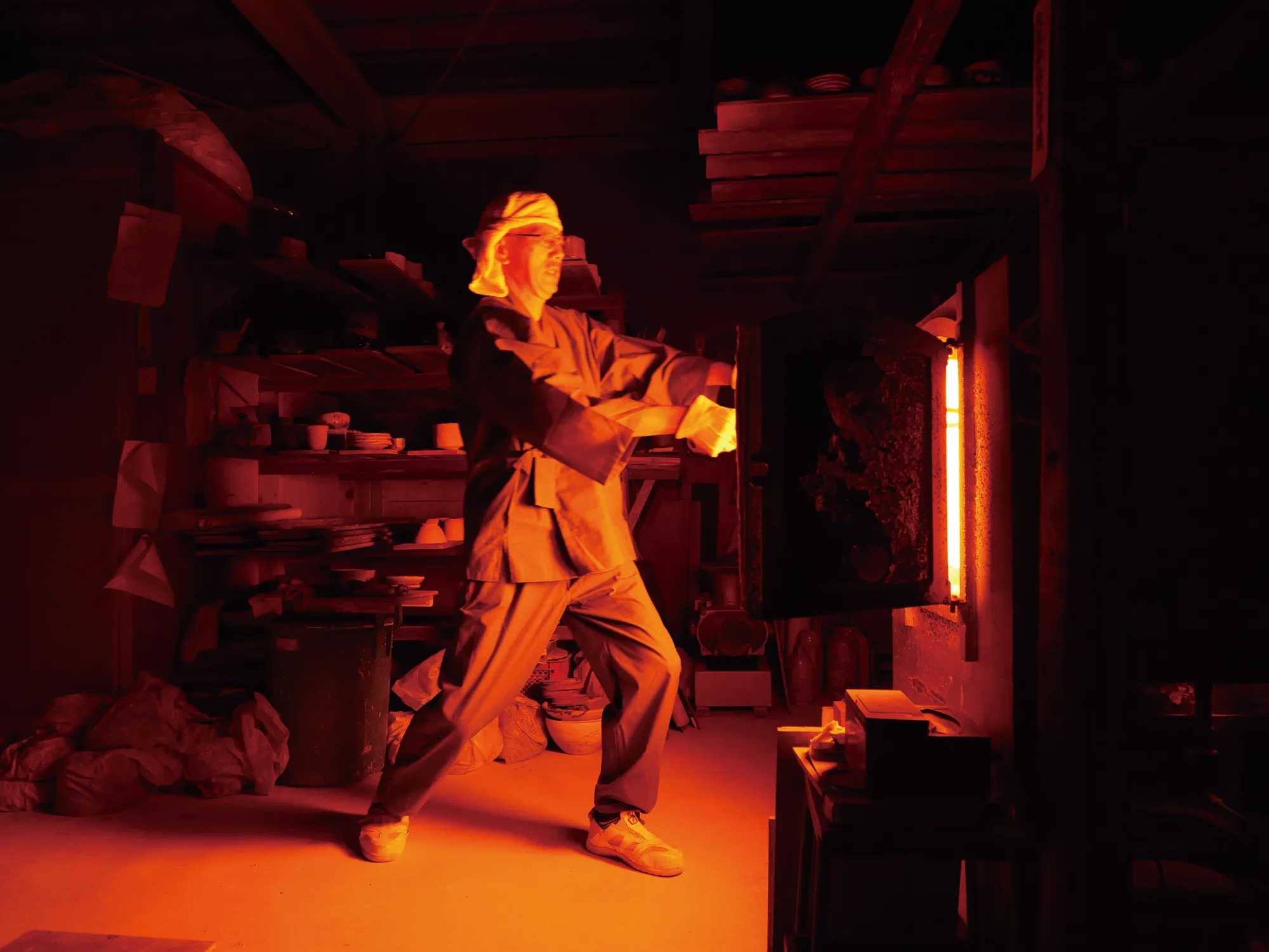
The kiln door opens. Inside glows orange, and a hooded figure is lit red.
Shino is fired in a strong reducing flame. The temperature climbs slowly, and the fire is watched day and night. The white changes with the season and the weather.
Setoguro (the black ware) is the opposite. At the hottest moment, the bowl is gripped with tongs, pulled out of the kiln and cooled at once. That is when the glaze turns deep black. One bowl in a firing that comes out as it should is reason enough for the firing.
"A few seconds' difference when you take it out changes everything. Judging that instant is the hardest part."
— Kato Takaya, from the film "Setoguro"
Teachers — white and black, in one kiln
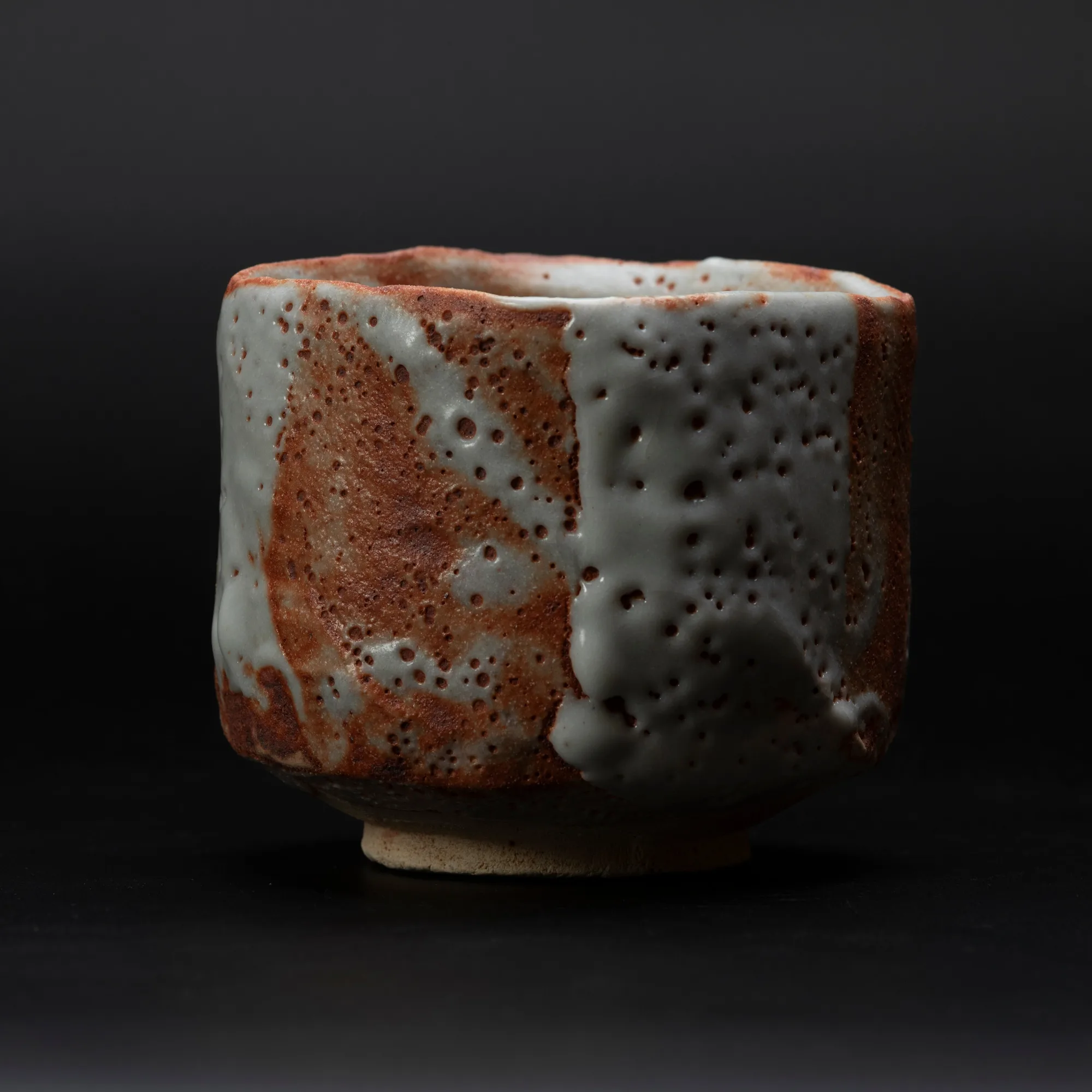
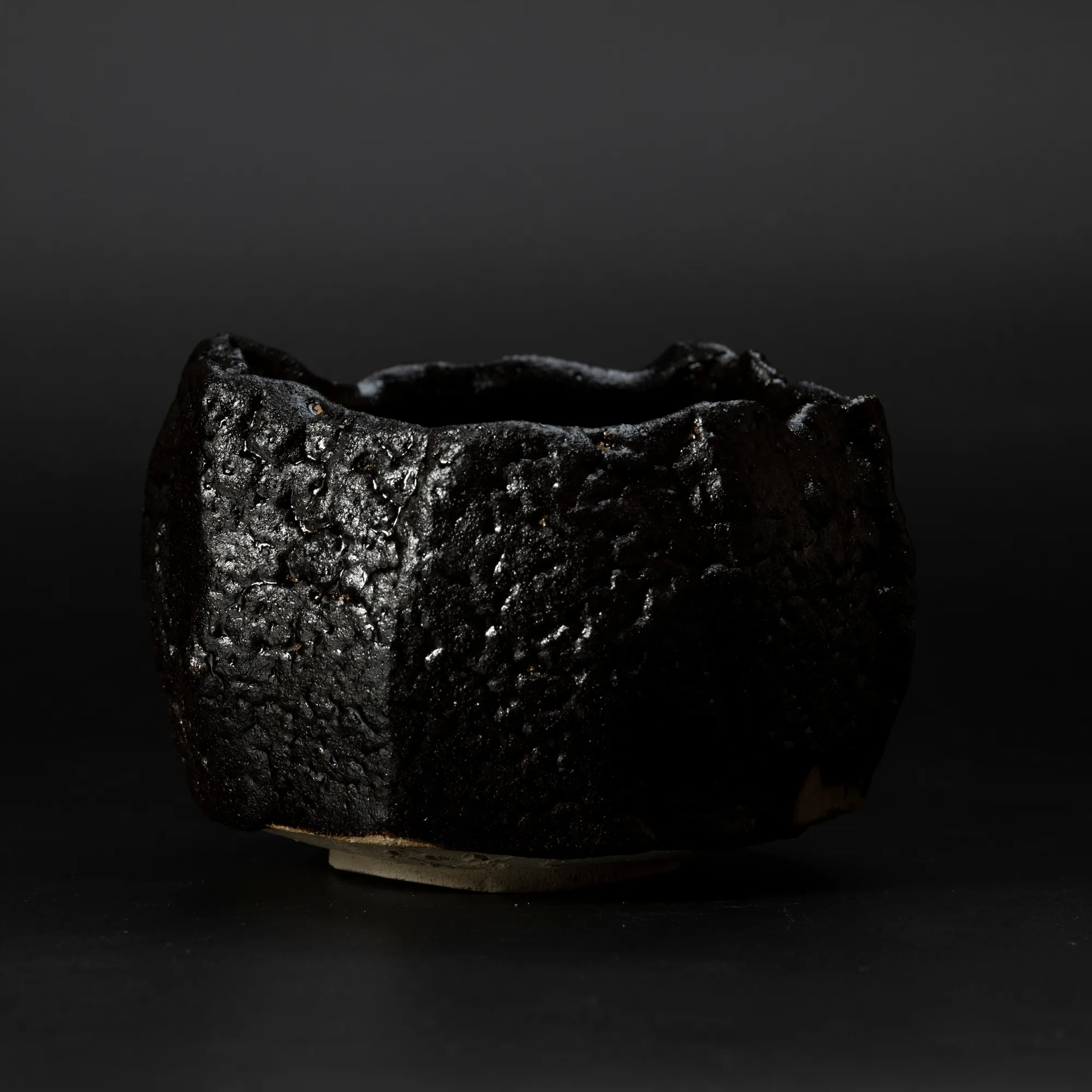
In 1930, Arakawa Toyozo found shards of Shino in the hills of Mino and brought Shino and Setoguro back to life. That Shino became the turning point in Kato Takaya's life.
Shino passed to Suzuki Osamu, Setoguro to Kato Kozo. Kato Takaya had the chance to learn directly from both of these holders of Important Intangible Cultural Property, Japan's highest designation for a craft (Setoguro in 1999 at Fu-juku, Kato Kozo's study group; Shino in 2005 in the successor training program).
Two techniques that went to different hands are fired today in one kiln.
"Shino is something you may never reach in a lifetime. To have met such a thing is my hope, and my light."
— Kato Takaya, from an interview in March 2026
For those who use the bowl — the best view comes last
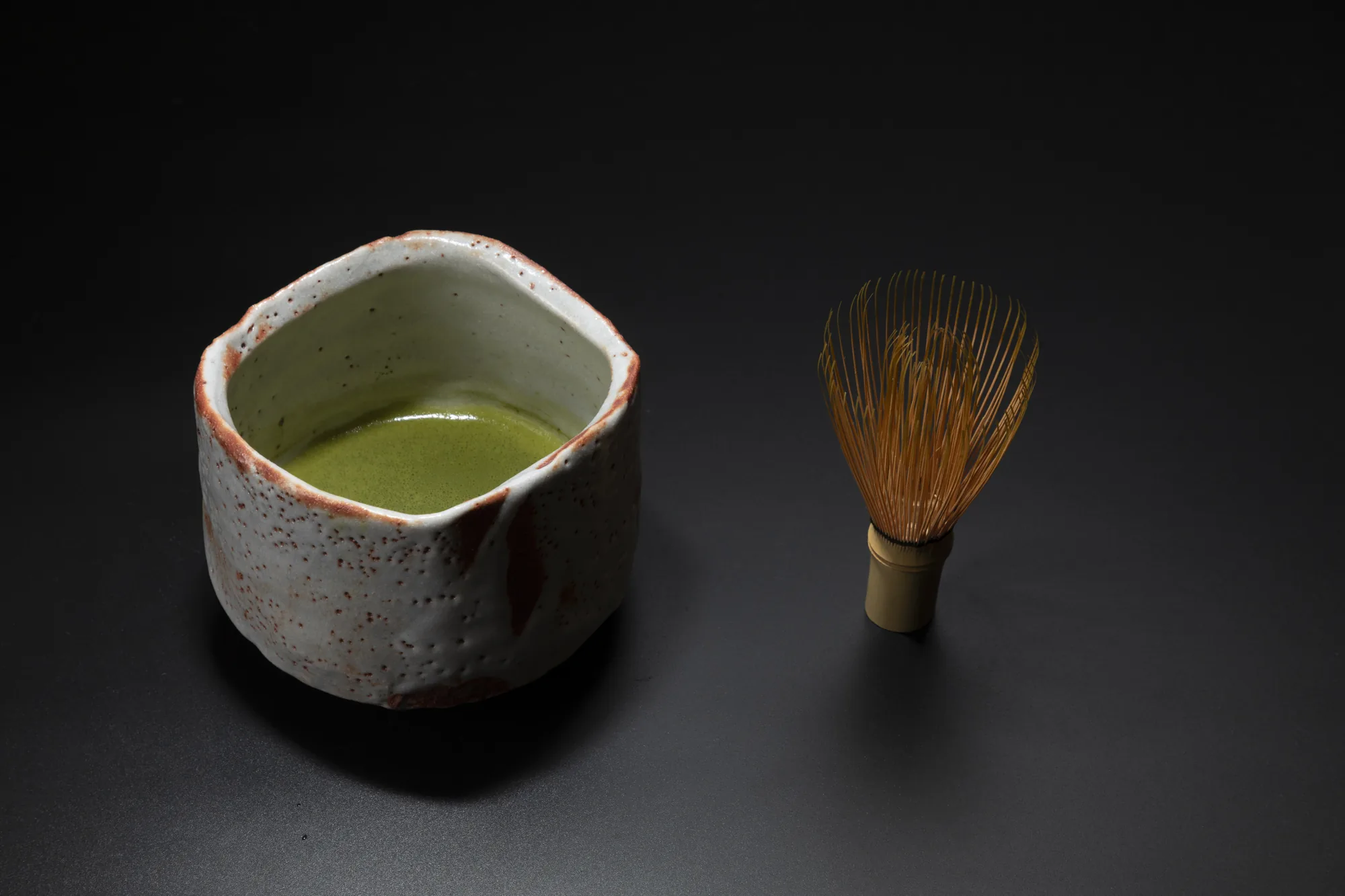
The tea goes down. At the bottom of the bowl, a landscape appears that is not the one outside.
The rim is made in an instant, without stopping the flow, with mountain ridges in mind. The inside, it has long been said, should feel deeper than it looks from outside. The view that remains after the tea has been drunk is the finest part of a chawan.
"The expression inside the bowl comes out in response to the tea. I hope that whoever holds this bowl feels something of Japanese culture in it."
— Kato Takaya, from Ichiwan Hyakuwa 3, "The Inside", and a filmed interview
Son (尊) — not to show oneself
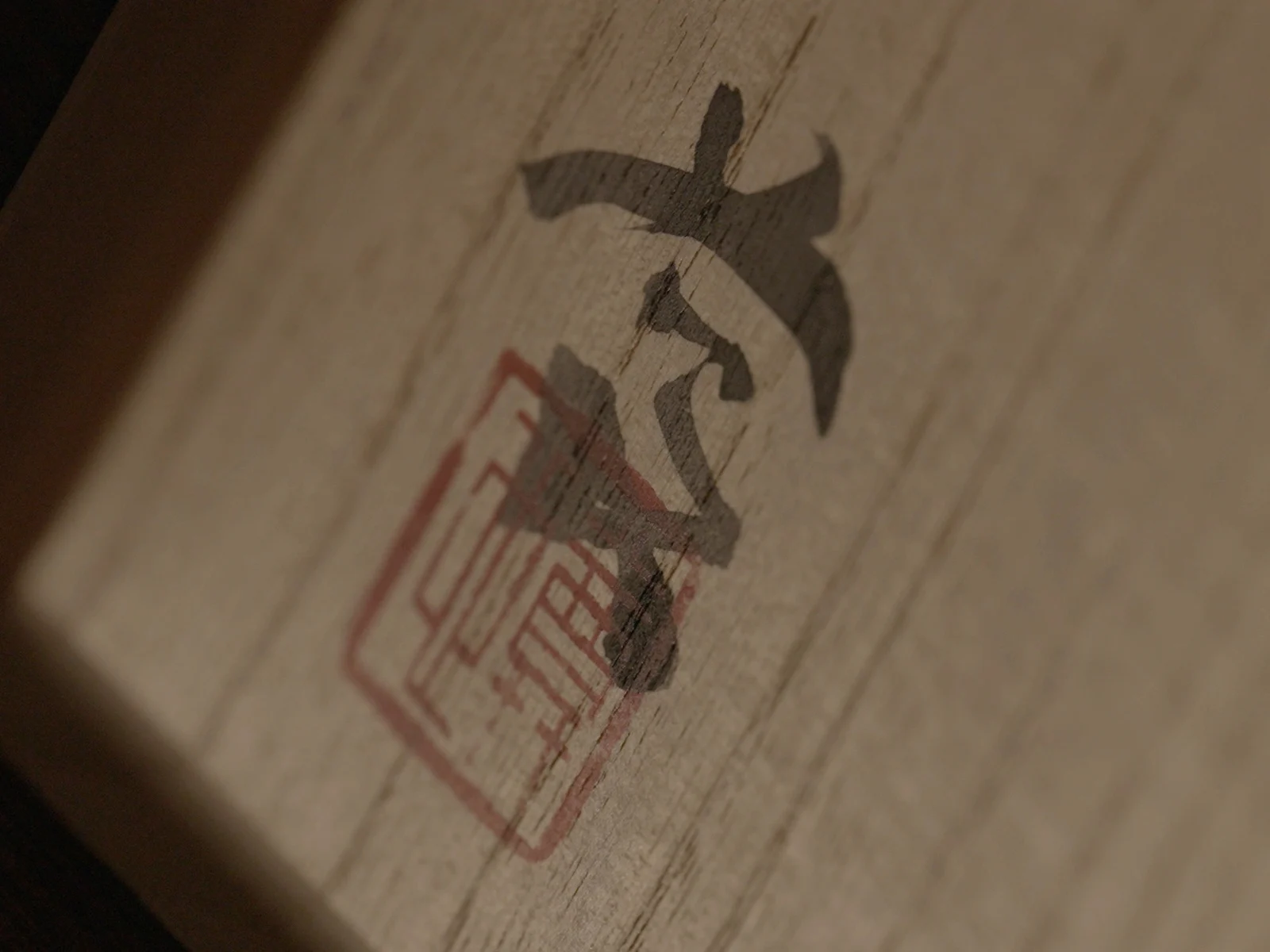
A brush moves across the lid of a paulownia box. In ink, the kind of vessel and the character 尊, then a red seal.
Son is the name Kato Takaya inscribes on his works, out of respect for nature. Not to show himself, but to make a vessel that takes in mountain, moon, sea, wind and river.
"A vessel is something you draw out of nature. You never match nature. Even so, I hope that what I made can be one thing that moves someone, as proof that I lived."
— Kato Takaya, from an interview in March 2026
In the artist's words
"Every failure brings a new discovery. From there a path opens, and branches, and goes on without end."
— Kato Takaya, from an interview in March 2026
"Words matter. But the feeling that will not go into words matters just as much."
— Kato Takaya, from an interview in March 2026
"The foot is the hidden part. That is exactly why it is made with the greatest care."
— Kato Takaya, from Ichiwan Hyakuwa 1, "The Foot"
How a bowl is made
- Clay— Mogusa clay from Mino. Found in few places, and in small amounts. Kneaded, then left to rest.
- Form— A hand-turned wheel a hundred years old, restored and used. Thrown in the time it takes the wheel to slow.
- Trimming— The half-dry bowl is turned over and the foot is carved with a wooden tool. Where to stop is read from the clay.
- Drying— No drying machine. The wind through the workshop dries the bowls.
- Glaze— Shino takes a thick feldspar glaze. Setoguro, a glaze of iron-bearing oniita mixed with ash.
- Kiln— Shino is fired in a strong reducing flame, seven days from lighting to cooling. Setoguro is pulled out with tongs at the hottest moment and cooled at once.
- Opening the kiln— Nothing is known until the door opens. The bowls that come out as hoped are few.
- Box— Each work gets its own paulownia box, the kind of vessel and the character 尊 on the lid, and a seal.
Chronology
- 1960
- Born in Tajimi, Gifu Prefecture
- 1984
- Graduated from Musashino Art University; Gifu Prefectural Art Exhibition, Prefectural Prize
- 1986
- Led the campaign to preserve the Onada Amagane old kiln site
- 1991
- Mino Ceramic Art Exhibition, Encouragement Prize
- 1993
- Selected for the Japan Traditional Kogei Exhibition; selected several times since
- 1999
- Studied Setoguro under Kato Kozo, holder of Important Intangible Cultural Property, at Fu-juku
- 2002
- Certified as a full member of the Japan Kogei Association
- 2005
- Studied Shino under Suzuki Osamu, holder of Important Intangible Cultural Property, in the successor training program
- 2012
- Gifu Prefecture commendation for contribution to the succession of traditional culture (Shino)
- 2018
- Mino Chawan Exhibition, Bronze Prize
- 2020
- Mino Chawan Exhibition, Encouragement Prize
- 2022
- 39th Takuo Award
- Today
- Full member, Japan Kogei Association; Standing Director, Mino Ceramic Art Association; certified Traditional Craftsman